Skip to content
Closed now · leave an appointment request TR Book now

Home / Treatments

Treatments

We explain in plain language how each treatment goes and what to expect.

Book now

Examination & Treatment Planning

An oral examination, imaging when needed and a written treatment plan tailored to you.

How does it go?
  • Examination of teeth and gums
  • Digital X-rays when needed
  • Prioritised written treatment plan
  • Options explained with pros and cons

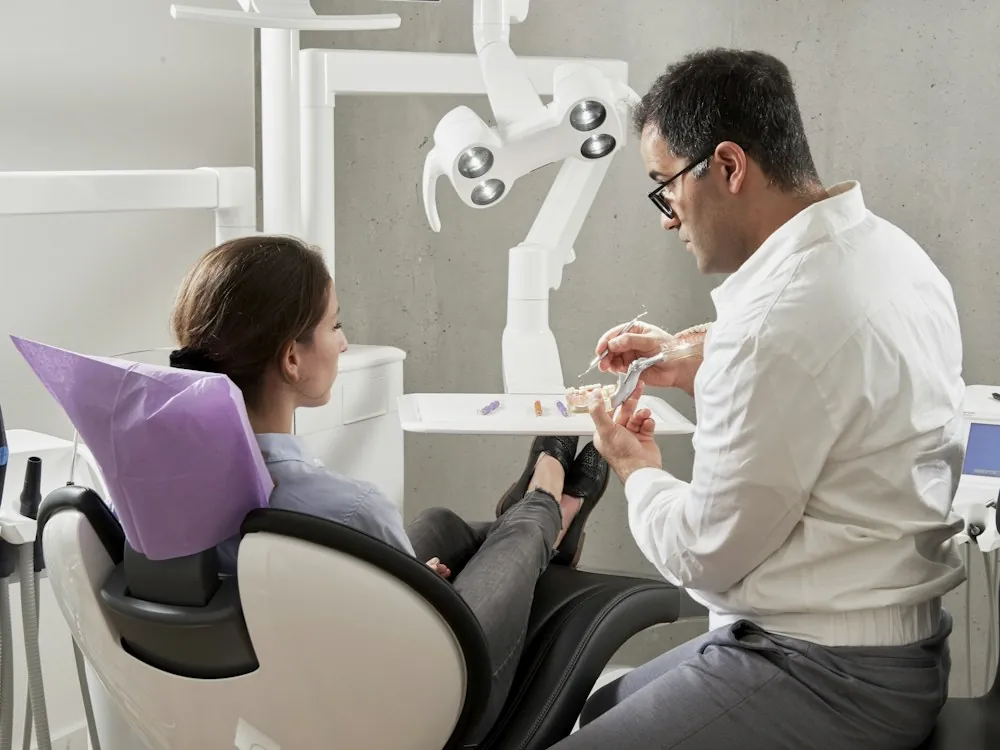
Every course of treatment starts with a thorough examination. Your dentist checks your teeth, gums, jaw joint and the soft tissues of the mouth, and listens to your concerns and medical history.

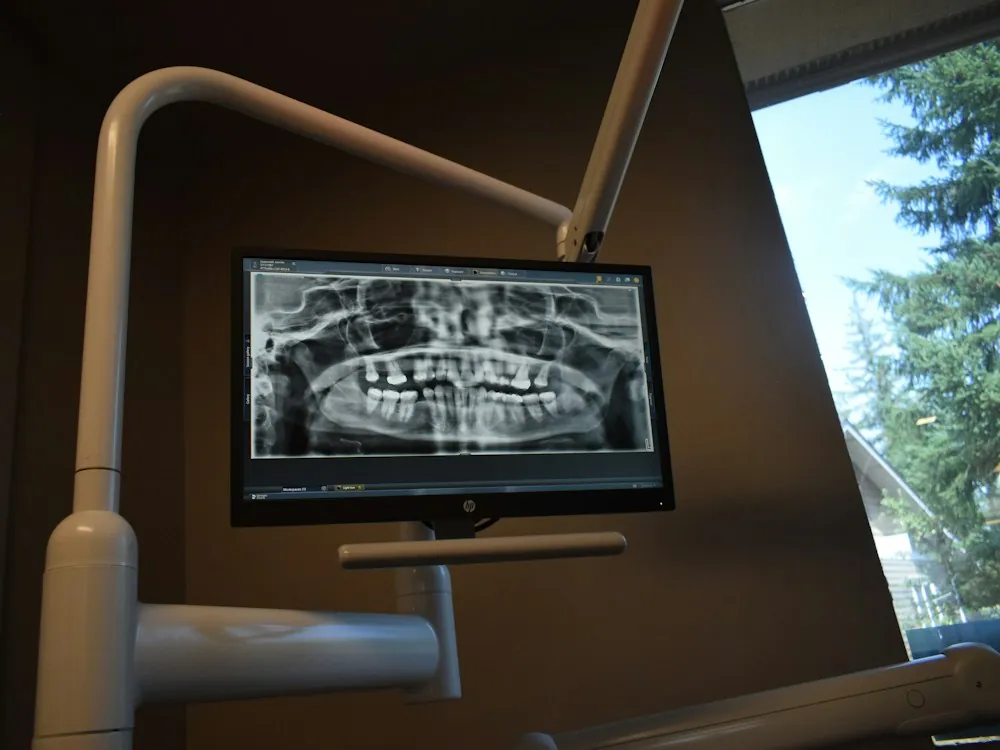
If the clinical findings are not enough, imaging such as a panoramic or periapical X-ray may be requested. The images are shown to you on screen and explained in plain language.

At the end of the examination we separate what is urgent from what can wait and set priorities. Your treatment plan lists the options, the expected number of sessions and the limits of each option. You are welcome to take it home, think it over and bring your questions to the next visit.
Appointment request

Fillings

Restoring tooth structure lost to decay with tooth-coloured materials.

How does it go?
  • Tooth-coloured composite fillings
  • Inlay / onlay when appropriate
  • Usually completed in one session

When decay is caught early, only the affected part of the tooth needs to be cleaned and restored with a filling. We mainly use tooth-coloured composite fillings, with the shade matched to your natural teeth.

The procedure is usually completed in a single session under local anaesthetic. Depending on the depth of the decay, the position of the tooth and the biting load, your dentist may suggest a different material or a lab-made restoration such as an inlay or onlay.

How long a filling lasts depends on oral hygiene, diet and habits such as teeth grinding. That is why we recommend regular check-ups to keep an eye on the edges of your fillings.

Appointment request

Root Canal Treatment

Cleaning infected or inflamed nerve tissue so the tooth can be kept in the mouth.

How does it go?
  • Performed under local anaesthetic
  • One or more sessions
  • Followed by a filling or crown
  • Monitored with follow-up X-rays

When decay or trauma reaches the nerve of the tooth (the pulp), you may notice sensitivity to hot and cold, throbbing pain or swelling. In root canal treatment the inflamed tissue is removed and the canals are shaped, disinfected and sealed.

Depending on the tooth and the number of canals, treatment takes one or more sessions. Sessions are carried out under local anaesthetic; we keep you informed throughout and pause whenever you need.

Afterwards the tooth is strengthened with a filling or a crown, depending on how much structure has been lost. Your dentist follows the healing with check-up X-rays.

Appointment request

Scaling & Gum Treatment

Professional cleaning, treatment of gum inflammation and ongoing periodontal care.

How does it go?
  • Scaling and polishing
  • Root planing
  • Personal hygiene coaching
  • Periodic maintenance plan

Bleeding gums, bad breath and receding gums are often linked to tartar build-up and gum inflammation. Because these signs often cause no discomfort at first, they are easy to overlook.

During scaling, hardened plaque is removed from the tooth surfaces with special instruments and the teeth are then polished. In more advanced cases, root planing may be used to clean deposits from inside the gum pockets.

After treatment we show you brushing and interdental cleaning techniques that suit your mouth. To keep your gums healthy, your dentist will recommend check-up and maintenance visits at regular intervals.

Appointment request

Dental Implants

Replacing missing teeth with an implant placed in the jawbone and a restoration on top.

How does it go?
  • Planning with 3D imaging
  • Assessment for bone grafting if needed
  • Restoration phase after healing
  • Regular check-ups and maintenance

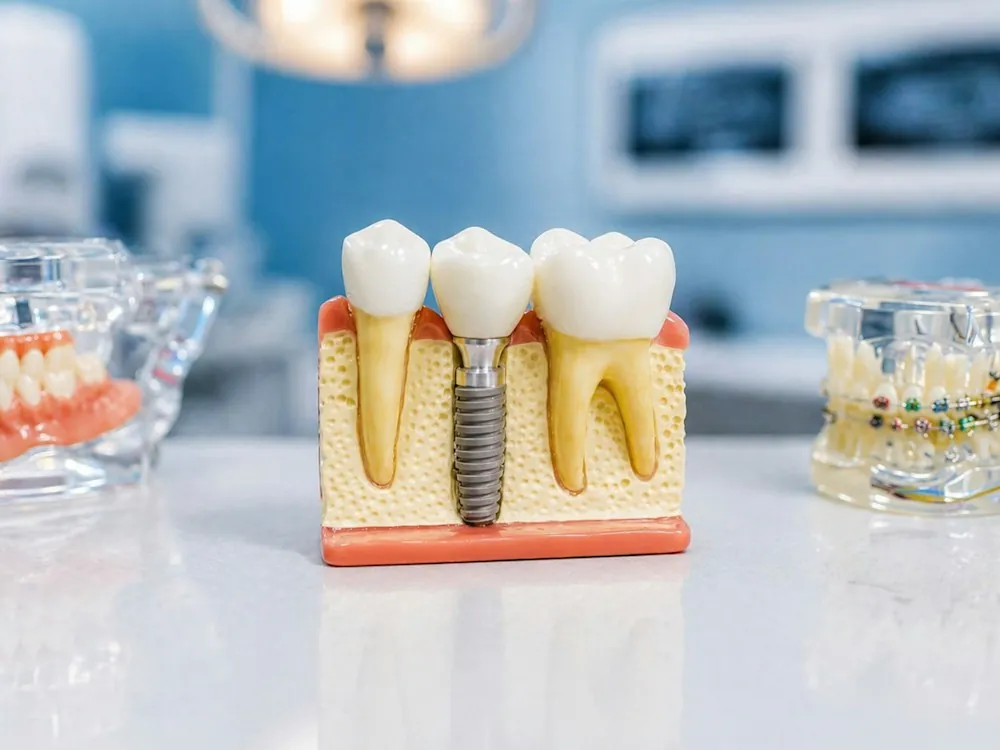
A dental implant is a small screw, usually made of titanium, placed in the jawbone to replace the root of a missing tooth. After a healing period, a crown, bridge or implant-supported denture is fitted on top.

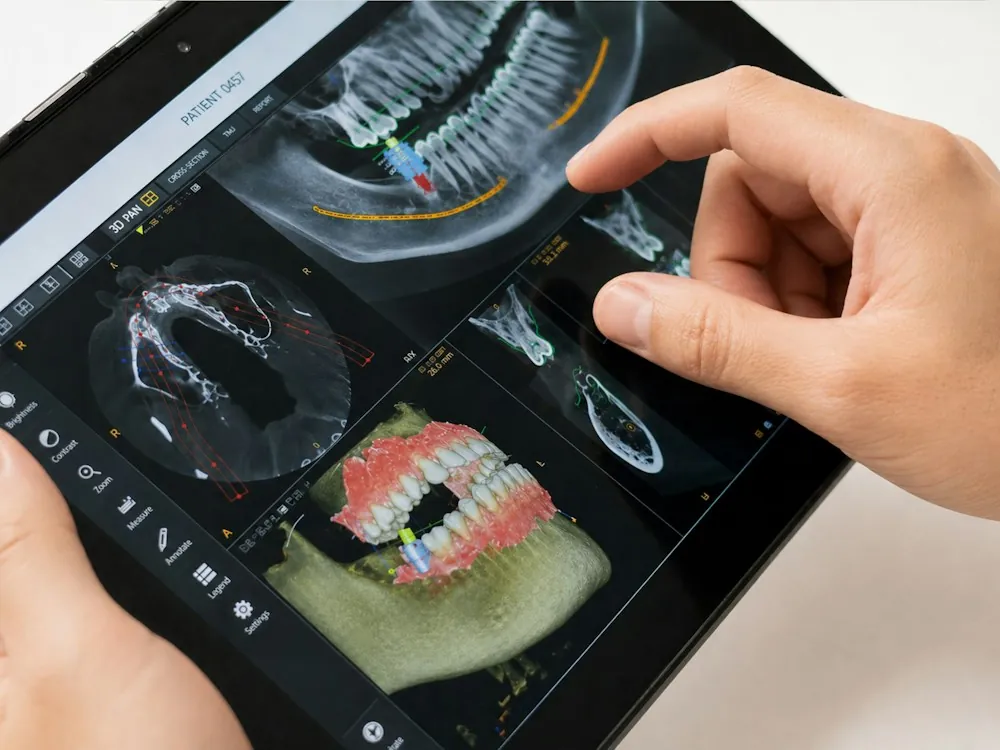
Suitability depends on your general health, the amount and quality of bone, the health of your gums and factors such as smoking. Planning usually involves 3D imaging. If there is not enough bone, additional procedures such as bone grafting may be needed.

Healing time varies from person to person; your dentist will explain the expected timeline after your examination. Good oral hygiene and regular check-ups are key to keeping an implant healthy over the long term.

Appointment request

Crowns, Bridges & Dentures

Restoring chewing function and appearance with crowns, bridges, full and partial dentures.

How does it go?
  • Crowns and bridges
  • Partial and full dentures
  • Implant-supported dentures
  • Try-in and adjustment visits

For patients with significant tooth damage or missing teeth, prosthetic treatment aims to restore chewing, speech and appearance.

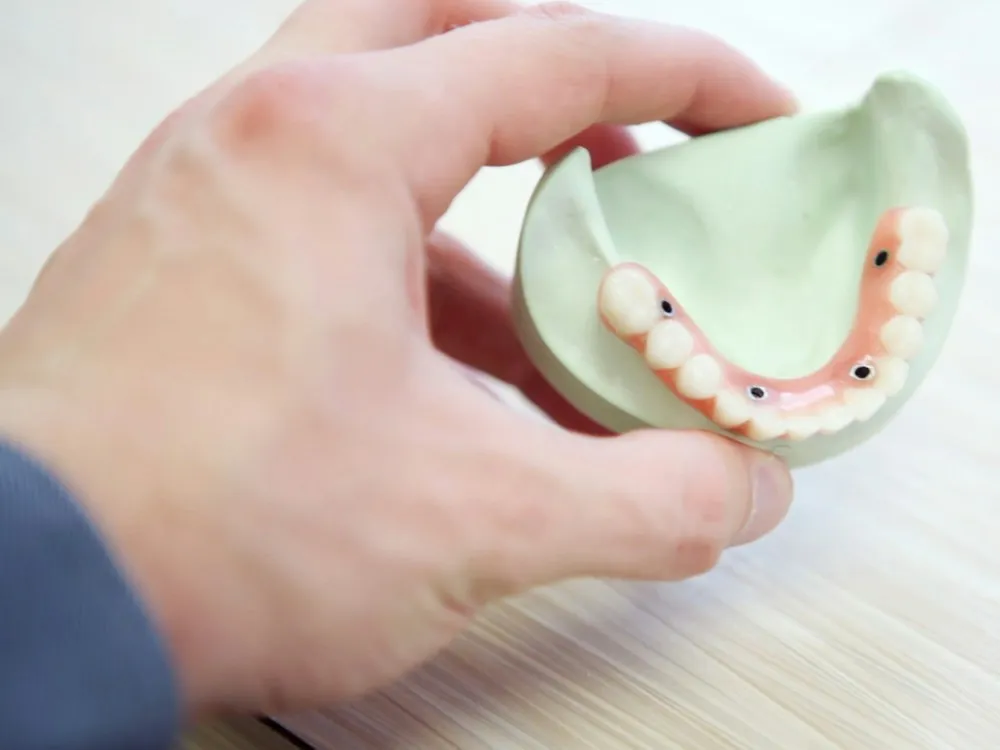
Fixed options include crowns that cover a single tooth and bridges that are supported by the teeth on either side of a gap. Where several teeth are missing, partial or full dentures are considered, and implant-supported dentures may be an option in suitable cases.

Making a prosthesis involves impressions, try-ins and fitting, with fit and comfort checked at every stage. If you are new to removable dentures, we schedule adjustment visits during the first weeks while you get used to them.

Appointment request

Cosmetic Dentistry

Improving the colour and shape of teeth with whitening, veneers and cosmetic bonding.

How does it go?
  • In-clinic and at-home whitening
  • Porcelain veneers
  • Cosmetic bonding
  • Pre-assessment and digital smile planning

Cosmetic treatments aim to improve the look of your smile in cases such as discolouration, chips, gaps or irregular shapes. Teeth and gums need to be healthy first, so any decay or gum problems are treated beforehand.

Teeth whitening can be done in the clinic under supervision or at home with custom trays prepared by your dentist. Results vary with the structure of the teeth and the cause of the staining, and existing fillings and crowns do not change colour with whitening.

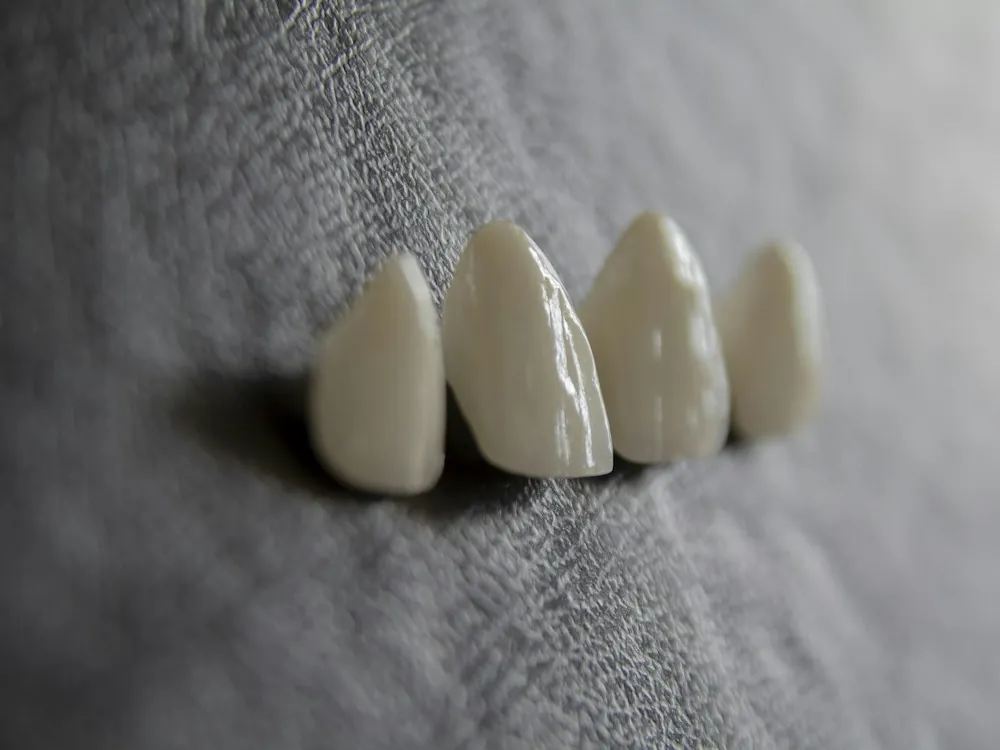
Veneers and cosmetic bonding involve thin restorations placed on the front surface of the teeth. Which option suits you is decided together, based on the current condition of your teeth and what you would like to achieve.

Appointment request

Orthodontics

Correcting crooked teeth and bite problems with braces or clear aligners.

How does it go?
  • Orthodontic records and analysis
  • Metal and ceramic braces
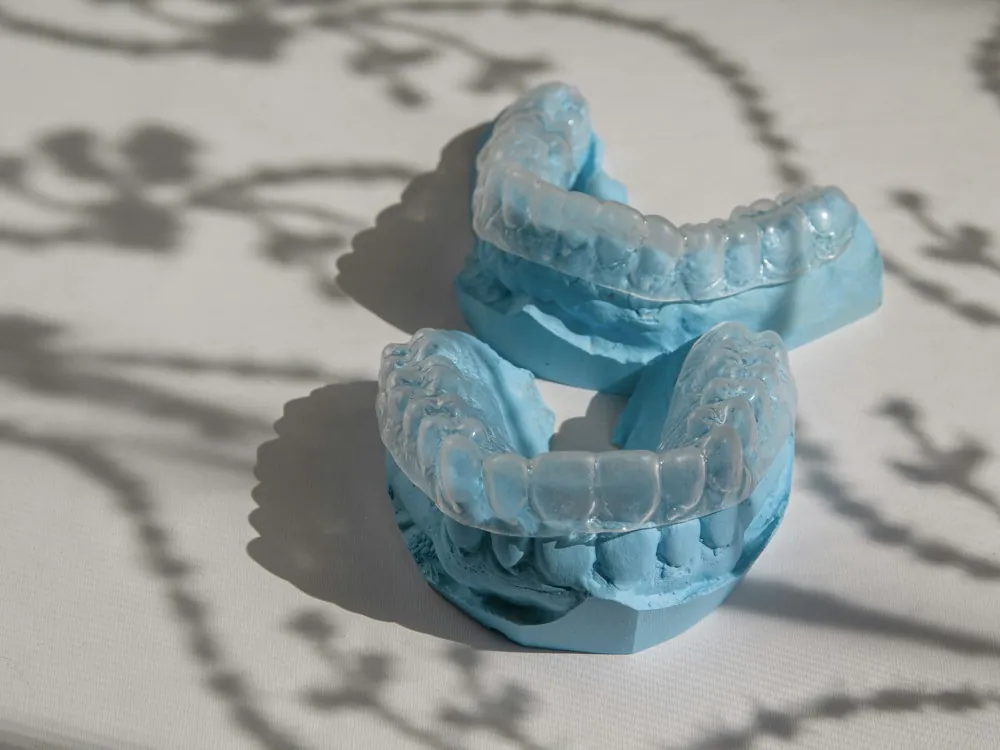
  • Clear aligner treatment
  • Retention phase

Orthodontics deals with crowded teeth, gaps, jaw alignment and bite problems. Treatment is not only about appearance; straighter teeth are easier to clean and help balance the bite.

An orthodontic assessment includes an examination, photographs, X-rays and impressions or scans. These records are used to set out the treatment options and expected duration. Depending on the case, metal or ceramic braces or clear aligners may be used.

At the end of treatment, a retainer helps the teeth stay in their new position. For children, early treatment to guide jaw development may also be considered.

Appointment request

Children's Dentistry

Check-ups, preventive care and treatment to protect baby teeth and permanent teeth.

How does it go?
  • Get-to-know-us visit
  • Fluoride and fissure sealants
  • Treatment of baby teeth
  • Space maintainers

Paediatric dentistry looks after children's oral health from infancy to adolescence. The first visits are often less about treatment and more about helping the child get comfortable with the clinic and the dentist.

Preventive care includes fluoride varnish and fissure sealants on the chewing surfaces of the back teeth. When needed, fillings or root treatment for baby teeth and space maintainers after early tooth loss are also provided.

We give parents practical guidance on age-appropriate brushing, diet and habits such as dummy use or thumb sucking. Whether a parent stays in the room during treatment is decided together, depending on the child.

Appointment request

Extractions & Oral Surgery

Removing teeth that cannot be saved, assessing impacted wisdom teeth and minor oral surgery.

How does it go?
  • Simple and surgical extractions
  • Wisdom tooth assessment
  • Written aftercare instructions
  • Follow-up and stitch removal

Extraction is planned for teeth that cannot be saved with treatment, teeth that are very loose, or teeth that need to be removed for orthodontic reasons. Your dentist first assesses whether the tooth can be kept; extraction is treated as the last option.

Impacted or partially erupted wisdom teeth do not always need to be removed. If they cause pain, recurring infection, damage to the neighbouring tooth or cyst formation, they are assessed with X-rays and, if needed, 3D imaging.

After the procedure you receive written instructions on bleeding control, eating, oral hygiene and medication. If stitches were placed, a follow-up visit is scheduled.

Appointment request